

Scholarships
2026 UACES Scholarship Recipients
Oana-Alexandra Borlea-Stancioi, University of Kent
My research examines how remoteness is created, embodied, and contested in a cluster of mountain hamlets in south-western Romania, famous for their apparent isolation. While such locations are often considered “left behind” or “disappearing”, my research investigates how they are transformed by new forms of engagement, including the arrival of incomers, tourists, against the accelerating spread of consumer practices and digital connections.
Inspired by Michel Foucault’s idea of heterotopias (1987), I approach these hamlets as interections of temporalities, imaginaries, and social order. I draw on Ardener and Harms’ argument that remoteness is not fixed but fluid, relational social construct (2007) and build on post-socialist research by Dzenovska and Mihăilescu, who argue that rural and marginalised spaces locally reinterpret wider transformations.
Through participant observation and semi-structured interviews with locals, newcomers and visitors, I explore how participants understand and (re)produce the label of “remote”, how this identity is negotiated in everyday life, and how it intersects with broader narratives of development, exceptionality, and sustainability. My research contributes to wider anthropological and interdisciplinary debates on rurality, peripherality and contemporary European transformations, especially in contexts where traditional classifications of centre and margins unravel.
The relevance of this study extends beyond Romania: as Europe continues to experience rural depopulation and uneven development, the project contributes to insights into how communities contest narratives of decline and build alternative futures. By documenting these lived experiences, the research contributes to discussions on locality, identity, resilience and European rural futures.

Pernille Dokkedal, Aarhus University
This project investigates the European Commission’s role in EU security and defense politics. Despite the area’s traditionally intergovernmental character, the Commission has become more active since Russia’s invasion of Ukraine and the second inauguration of Trump. This raises a puzzle: Why has the Commission taken on a greater role in a domain that remains a core member state competence? Existing studies often assume the Commission either seeks power expansion or merely coordinates member state preferences. Yet we know little about how it understands this role, what motivates its engagement, or how internal governance culture is shifting in response to new geopolitical pressures. The project therefore addresses three questions in a monograph:
1. How are EU security and defense governance dynamics changing within the Commission in light of a new geopolitical reality?
2. How do Commission officials construct, practice, and legitimize their role in this sensitive area?
3. How is this role shaped by interactions with other security actors, such as the defense industry and NATO?
Methodologically, the project combines ethnographic fieldwork, expert interviews, and process tracing of selected policy cases. The core research activity is a three-month participative ethnography within the Directorate-General for Defense Industry and Space, including shadowing relevant cabinet officials. This provides unique real-time insight into the Commission’s work culture, internal meaning-making, and inter-institutional interactions.
Theoretically, the project adopts an eclectic abductive approach drawing from organizational culture, prac-tice, and role theory. By opening the ‘black box’ of the Commission, it provides a detailed account of an understudied shift in EU security and defense governance while contributing to broader debates on legitimacy, power, and agency in EU governance.
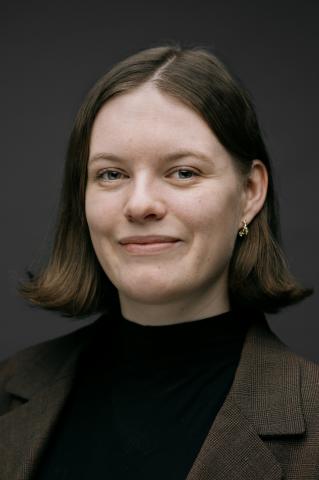
AJ Kurdi, UC Berkeley
While LGBTQI movements in the Global North have made significant legal and social gains, the field of queer of color critique highlights how mainstream LGBTQI movements—and the institutions responding to them—tend to represent the interests of white, middle- and upper-class gay men. Furthermore, the LGBTQI cause is increasingly instrumentalized by racist, xenophobic, and imperialist political agendas. While the self-organization of racialized LGBTQI communities has a decades-long history in the United States, it is only in recent years that such groups have established independent initiatives to resist their marginalization in Central and Eastern Europe (CEE), where race as a category of analysis and mobilization remains politically discouraged by state institutions, while public discourse grows increasingly racially exclusive and mobilized around the notion of “gender ideology.”
This research examines how queer of color organizing in two CEE countries—Germany and Hungary—shapes the priorities and political orientations of mainstream LGBTQI movements, laws, and public policies. It investigates how the tactics and goals of grassroots queer of color activists differ from those of mainstream organizations, how these differences relate to the broader marginalization of racialized LGBTQI groups, and how intersectionality is articulated in political environments unfavorable to race- and/or sexuality-based claims. I trace two contrasting regimes: Germany’s liberal, integrationist model and Hungary’s illiberal, ethnonationalist one, showing how the former relies on moral exceptionalism and securitization restricting dissent, while the latter enforces repression through “family protection” and anti-LGBTQI laws. The research offers a relational-comparative, multi-scalar account of how Romani queer and Palestine-solidarity queer movements in both countries navigate and contest these distinct yet convergent forms of state repression. It combines participant observation, semi-structured interviews with activists and policymakers, and critical frame analysis with quantitative mapping of funding flows at the European Union, national and local national levels that sustain or constrain this type of organizing.

Maria Martins, KU Leuven
Since the signature of its strategic partnership that the European Union (EU) and Brazil have acknowledged each other as key interlocutors in world politics, namely in the areas of human rights and climate change. Although the official narrative presents an overall positive rhetoric, academic debate demonstrates skepticism towards the effectiveness of this partnership given its normative divergences. Yet, one may argue this is a limited and simplistic analysis, considering that the existing processes of cooperation at the bilateral level (EU - Brazil Human Rights Dialogues), but also in interregional (e.g., EU – Mercosur) and multilateral forums (e.g. UN Human Rights Council and UNFCCC). By examining the everyday processes of the diplomacy between the EU and Brazil, this thesis reveals that the status of this partnership is much more rather nuanced and complex. Thus, this research project seeks to answer two main research questions: How and why does diplomatic practice influence the process of international cooperation? and how does the EU and Brazil, a partnership that is characterised by different and divergent worldviews, cooperate in norm-fuelled policy areas (e.g., human rights and climate change)? To answer the research questions, I draw from insights in the cross- fertilisation of diplomacy studies and practice theory (Cornut and Pouliot 2015) through a mixed- method approach. On the one hand, to 'read' (Pouliot 2014) practices, this PhD research conducts a textual analysis of key documents of the strategic partnership. To 'hear' practices (Pouliot 2014; Niccolini 2009), I conduct semi-structured interviews with European and Brazilian diplomats, and finally, to 'see' practices (Adler-Nissen 2015; Neumman 2015), I conduct ethnographic fieldwork in diplomatic settings. The findings of this thesis seek to explain through how through routinised and relational practices, diplomatic actors, under certain circumstances, are able to foster cooperation under the shadow of political contestation.

List of Recent Scholarship Recipients
Year
Year
Name
Name
Institution
Institution
Topic
Topic
Research Blog
Research Blog
Year
2025
Name
Yingtao Li
Institution
King’s College London
Topic
Tech giants’ roles in global governance amid geopolitical tension
Research Blog
Yingtao's Blog
Year
2025
Name
Benedetta Morari
Institution
LSE – London School of Economics and Political Science
Topic
Reshaping (Dis)Unity: How Internal Dissent Fuels the European Union’s Global Engagement
Research Blog
Year
2025
Name
Giovanni Parente
Institution
Maynooth University
Topic
The European Union at sea: a historical and geopolitical analysis of EU maritime operations and their impact on maritime governance and security, 2008–2024
Research Blog
Giovanni's Blog
Year
2025
Name
Elena Pro
Institution
LSE – London School of Economics and Political Science
Topic
The relationship between institutions, actions, and political identities in Europe
Research Blog
Elena's Blog
Year
2024
Name
Yuetong Guo
Institution
King's College London
Topic
In the context of crisis and changes: the EU's role in international climate policy
Research Blog
Yuetong's Blog
Year
2024
Name
Paul Kindermann
Institution
LSE – London School of Economics and Political Science
Topic
Innovating European democracy: The promise of citizen participation in the EU
Research Blog
Year
2024
Name
Nosirkhon Qodirov
Institution
University of Szeged
Topic
The European Union’s Foreign Policy in Central Asia and its Perceptions
Research Blog
Year
2024
Name
Zala Pochat Križaj
Institution
King's College London
Topic
Mass killings in Kočevski Rog, Slovenia and the strategy of revenge: post-Second World War extrajudicial massacres and reconciliation in contemporary Slovenia
Research Blog
Zala's Blog
Year
2023
Name
Vassilis Karokis-Mavrikos
Institution
University of Surrey
Topic
Agenda-setting and Policy-formulation in EU Pharmaceutical Policymaking
Research Blog
Vassilis' Blog
Year
2023
Name
Swetha Ramachandran
Institution
Graduate Institute of International & Development Studies, Geneva
Topic
Dissecting Donor Dough: Analysing Politics and Legacies of Western Aid Financing in Africa
Research Blog
Swetha's Blog
Year
2023
Name
Lauren Rogers
Institution
University of Edinburgh
Topic
Ontological (In)Security: EU Foreign Policy Narratives on the Russian Invasion in Ukraine
Research Blog
Lauren's Blog
Year
2023
Name
Sadaf Shahhosseni
Institution
Université Sorbonne Nouvelle
Topic
The European Union's Capacity as an Autonomous Actor: A Case Study of the Iranian Nuclear Crisis
Research Blog
Sadaf's Blog
UACES PhD Fieldwork Scholarships
£1,500.00 to Fund the Research That Matters
Fieldwork transforms PhD research from theoretical to groundbreaking, but it requires resources that many doctoral students don't have.
Since 2002, UACES Fieldwork Scholarships have existed to bridge that gap by supporting hundreds of postgraduate researchers worldwide.
2026 Scholarship applications are now closed and winners have been notified
What We Offer
Four annual scholarships of £1,500.00 each supporting PhD researchers conducting fieldwork on contemporary European Studies. Your £1,500.00 award can support any legitimate fieldwork expenses, such as:
✓ International or domestic flights
✓ Accommodation during fieldwork
✓ Visa fees and travel documents
✓ Research materials and supplies
✓ Archive access fees
✓ Transportation to research sites
✓ Interview transcription services
✓ Data collection tools

How It Works
-
Receive £1,000.00 upfront (January) to book flights, accommodation, and research materials
-
Conduct fieldwork throughout 2026 at your own pace
-
Submit blog post about your research + receipts showing expenses
-
Receive final £500.00 payment
Simple. Flexible. Supportive.
Who Can Apply?
Eligibility:
-
Current UACES PhD Researcher Members
-
Enrolled in PhD program studying contemporary European Studies
-
Planning fieldwork in 2026
-
No other funding for this specific fieldwork
Special Consideration:
One scholarship is specifically reserved for researchers who are:
-
From ethnic minority or traditionally underrepresented backgrounds, OR
-
Enrolled at universities in Africa, Asia, Caribbean, Central America, or South America, OR
-
Studying in non-traditional disciplines (anthropology, cultural studies, philosophy, etc.)
We actively encourage applications from diverse backgrounds across all four scholarships.
How To Apply
Application Requirements
2. Research proposal (within application form, including):
- What fieldwork will you conduct?
- Where will you conduct it?
- Why is in-person research necessary?
- How does this advance your doctoral research?
- What is your timeline?
3. Budget breakdown:
- Itemized list of expenses
- Realistic cost estimates
- Total should reflect genuine needs
4. Support letter from PhD supervisor:
- Can be submitted via application form or emailed directly to [email protected]
- Should confirm fieldwork is essential to your research
- Should confirm you have no duplicate funding
5. Current UACES membership:
-
You must be a PhD Researcher Member
-
Not a member? Join here before applying
Download Application Template - Prepare offline before submitting
Selection Process
Review Period: November 2025
Applications reviewed by UACES committee members based on:
-
Eligibility criteria met
-
Outcomes clearly defined
-
Budget explicit and good value for money
-
Location, relevance, and value for core research question
-
Overall feasibility and significance
Winners announced: Announcement coming shortly
Key Dates
Date
Date
Milestone
Milestone
Date
Early October 2025
Milestone
Applications open
Date
7 November 2025
Milestone
Application deadline
Date
November 2025
Milestone
Review period
Date
16 February 2026
Milestone
Winners announced
Date
February 2026
Milestone
First payment (£1,000.00)
Date
Throughout 2026
Milestone
Fieldwork conducted
Date
Upon completion
Milestone
Blog post + receipts + final payment (£500.00)
What Past Recipients Say
Zala Pochat, 2025 Recipient, King’s College London: "Without UACES support, conducting the fieldwork for my thesis would have been challenging. As a self-funded student, the scholarship not only funded my trip but also enabled my research. UACES provided valuable support in developing my core arguments, based on findings from archival research and interviews conducted in Slovenia. I am now presenting my findings at conferences, including the Association for Slavic, East European, and Eurasian Studies’ and the British International Studies Association’s annual conferences. None of that happens without those crucial weeks in Slovenia."
Yuetong Guo, 2025 Recipient, King’s College London: "Without the UACES Scholarship, I could not have completed the fieldwork in Brussels and my visiting to UC Louvain that became the backbone of my thesis. It enabled me to collect original interview data that I could not have obtained from secondary sources. The funding enabled over around 20 in-depth elite interviews with officials from European Commission and Member States, producing original evidence for my EU ETS case studies. The scholarship didn’t just cover a trip—it unlocked access, timing, legitimacy and credibility at a crucial stage of my PhD. Building on these findings, I have been selected to present at brilliant conferences this year such as UACES Annual Conference Liverpool 2025, and I’m finalising two data-rich chapters. This support materially changed the trajectory and quality of my research."
Frequently Asked Questions
If you cannot find an answer to your scholarships-related question here, feel free to contact us.
- Can I apply if I'm in my first year of PhD?
Yes, if you're planning fieldwork in 2026. However, applications are stronger when you can demonstrate clear preparation and feasibility.
- I'm not sure my fieldwork will cost the full £1,500.00. Should I apply?
Yes. Budget realistically for genuine needs. If your fieldwork costs less than £1,500.00, you'll receive only what you actually spend (up to the £1,500.00 maximum).
- My fieldwork might extend beyond 2026. Is that a problem?
No. The scholarship covers fieldwork conducted primarily in 2026, but we understand research timelines can shift. Just explain your timeline clearly in the application.
- Can my supervisor email the support letter separately?
Yes. They can email it directly to [email protected] referencing your application. Submit your application by the deadline; letters can arrive shortly after.
- Do I need to be presenting at a conference or event?
No. This scholarship specifically funds fieldwork for your PhD research, not conference attendance. (We have separate travel funding for conferences.)
- What if I don't have all my expenses receipts?
We understand that some fieldwork expenses (especially in certain locations) don't generate formal receipts. Provide what documentation you can and explain any gaps.
- Can I use the scholarship for online/remote research?
No. This scholarship specifically supports in-person fieldwork. Your application should demonstrate why physical presence is necessary for your research.
- I'm from a non-traditional discipline. Should I apply for the reserved scholarship or regular ones?
Apply through the regular application process. Our review committee will consider you for both the reserved scholarship and the general scholarships.
- What makes a strong application?
Strong applications:
-
Clearly explain why in-person fieldwork is essential
-
Demonstrate careful planning and preparation
-
Provide realistic, itemized budgets
-
Connect fieldwork to specific research questions
-
Show how findings will advance European Studies
-
Are concise and well-organized
-
- Can I apply if I've received other UACES funding before?
Yes, if you haven't received this specific scholarship before and don't have other funding for this particular fieldwork project.
- What do I need to do after receiving the scholarship?
After fieldwork completion:
-
Write a blog post (1000-1500 words) about your fieldwork experience or findings
-
Submit receipts showing your fieldwork expenses
-
Maintain UACES membership throughout
Then we process your final £500.00 payment.
-